
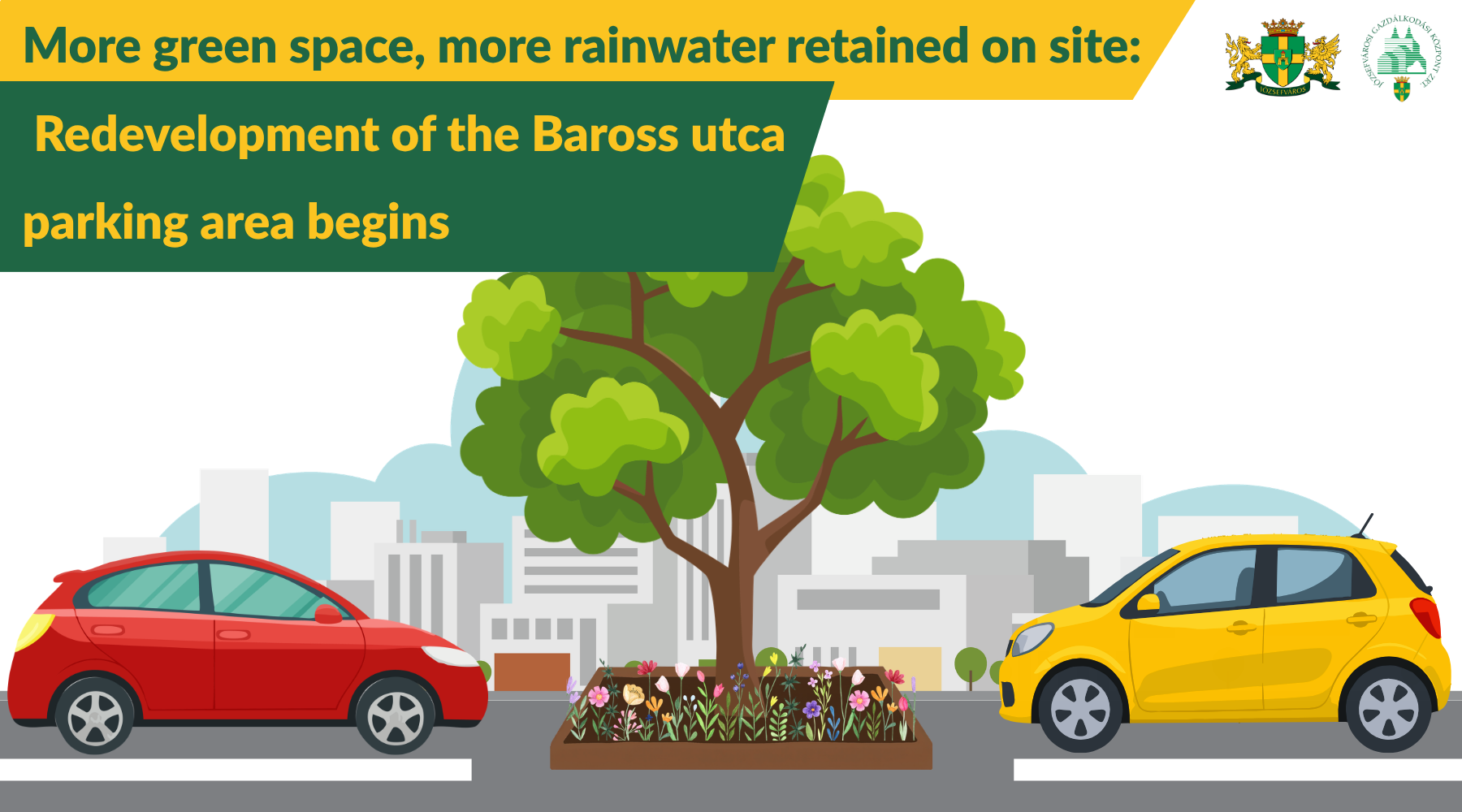
A more attractive, greener and climate-resilient public space will be created in front of 119 Baross utca.
The redevelopment project will not only increase the proportion of green space but will also introduce modern solutions for retaining and utilizing rainwater on site. As part of the project, tree pits incorporating the Stockholm Tree Planting System (STP/SFR) and a Rainmax perennial planting bed, designed to require minimal irrigation in the long term, will be constructed.
Construction works will begin on 10 November 2026 and are expected to continue until mid-December. During this period, parking restrictions will be in effect in the area. Motorists are kindly asked to follow the temporary information signs placed on-site.
Greener public spaces, better parking facilities
One of our key objectives is to increase the amount of green space throughout Józsefváros. To support this goal, several street renewal projects have been developed in recent years, incorporating tree planting and the expansion of planted areas.
The redevelopment of the area in front of 119 Baross utca will create a more welcoming, greener and better-organized public space while preserving as many parking spaces as possible. The project also includes the renovation of the parking surface and the restoration of the drainage system.
The site currently accommodates 31 legal parking spaces. Following the redevelopment, 30 parking spaces will remain available.
Keeping rainwater where it falls
One of the principal aims of the project is to ensure that a greater proportion of rainfall remains on-site and benefits local vegetation. Rather than relying on conventional rapid drainage, the design follows the principles of the “sponge city” approach, under which rainwater is retained within green spaces and plant root zones whenever possible, instead of being immediately discharged into the sewer network. Depending on local conditions, the water is then gradually absorbed into the soil.
The system will collect rainwater from nearby rooftops, road surfaces and parking areas, directing it to planted areas where it can support vegetation.
More root space for urban trees
The Stockholm Tree Planting System (SFR) provides trees with a significantly larger, interconnected and well-aerated rooting environment than conventional planting pits.
The system enables healthy root development beneath paved surfaces while also creating pore spaces that temporarily store rainwater. Through a purpose-built distribution network within the SFR structure, rainwater is delivered directly to the trees’ root zones.
This approach not only provides trees with improved growing conditions but also helps retain rainwater on-site and supports the natural water supply of urban vegetation.
Tree species selected for the site will be well adapted to urban conditions, including summer heat stress, periodic drought and proximity to paved surfaces.
Rainmax perennial bed: diverse planting, less irrigation
Another key element of the project is the Rainmax perennial planting bed, which captures rainwater from surrounding roofs and paved surfaces and stores it within the root zone of plants.
The planting scheme will consist of species that can thrive in urban environments, tolerate intense summer heat and withstand periods of abundant rainfall followed by extended dry spells. The objective is to create a planting bed that can be sustained over the long term with minimal supplementary irrigation.
During the establishment period, while the plants are developing their root systems, additional watering may naturally be required.
More green space, less rainwater runoff
The redevelopment of the area in front of 119 Baross utca supports both the expansion of green infrastructure and more sustainable rainwater management. Evapotranspiration from vegetation will help improve the local microclimate, while the expanded rooting space will provide healthier growing conditions for the newly planted trees.
Retaining rainwater on-site will also reduce the volume of water entering the sewer network during heavy rainfall events. The project therefore aims to create an urban green space that offers a more favorable environment for plants and can operate more sustainably under increasingly hot, dry and extreme weather conditions.
To ensure the long-term effectiveness of the system, regular maintenance of water inlets, sediment traps and planting areas will be required.
During construction, residents and road users should expect temporary inconvenience associated with works and construction-related noise. We kindly ask for their patience and understanding.
Our goal is to create green spaces throughout Józsefváros that remain sustainable during periods of summer heat, contribute to cooling the urban environment and help retain valuable rainwater where it falls.
